
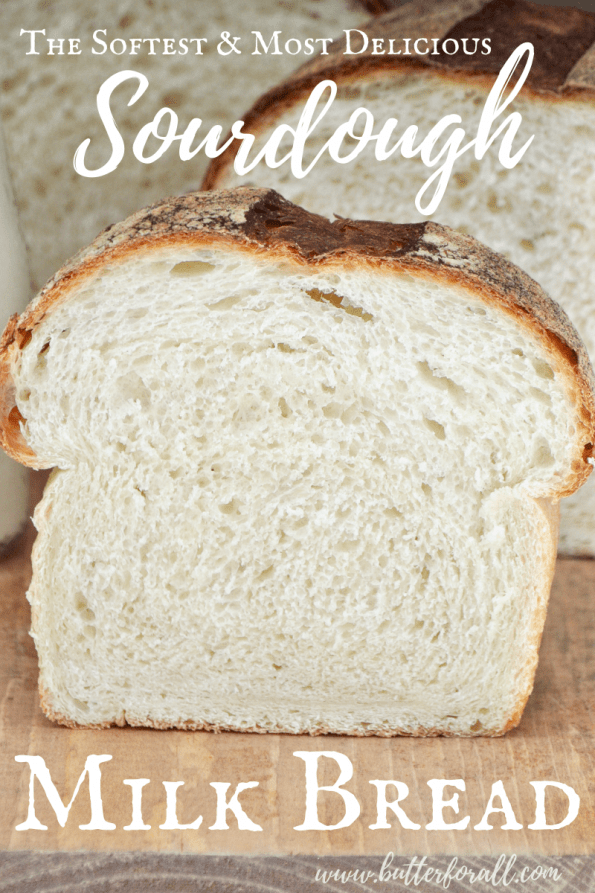
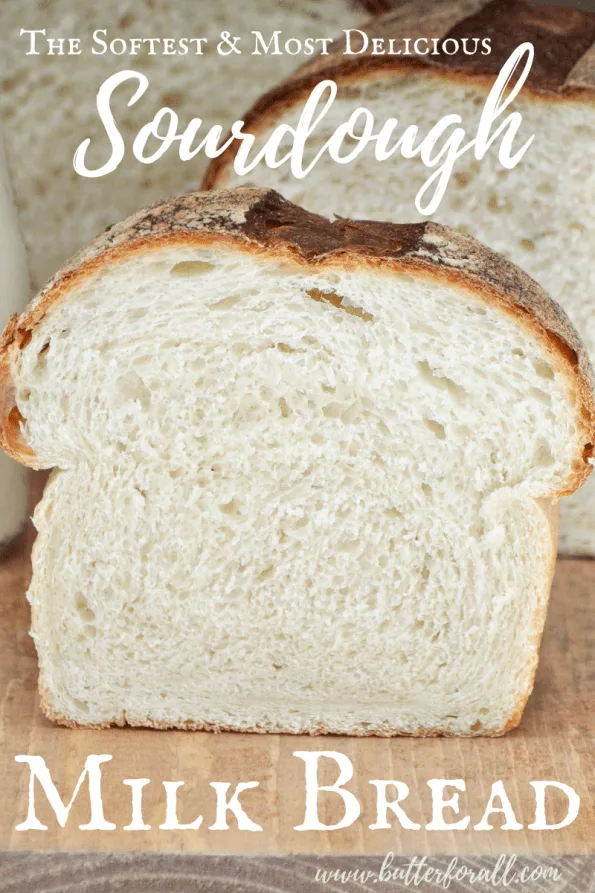
Let me introduce you to the softest, most pillowy, most delicious sourdough milk bread ever.
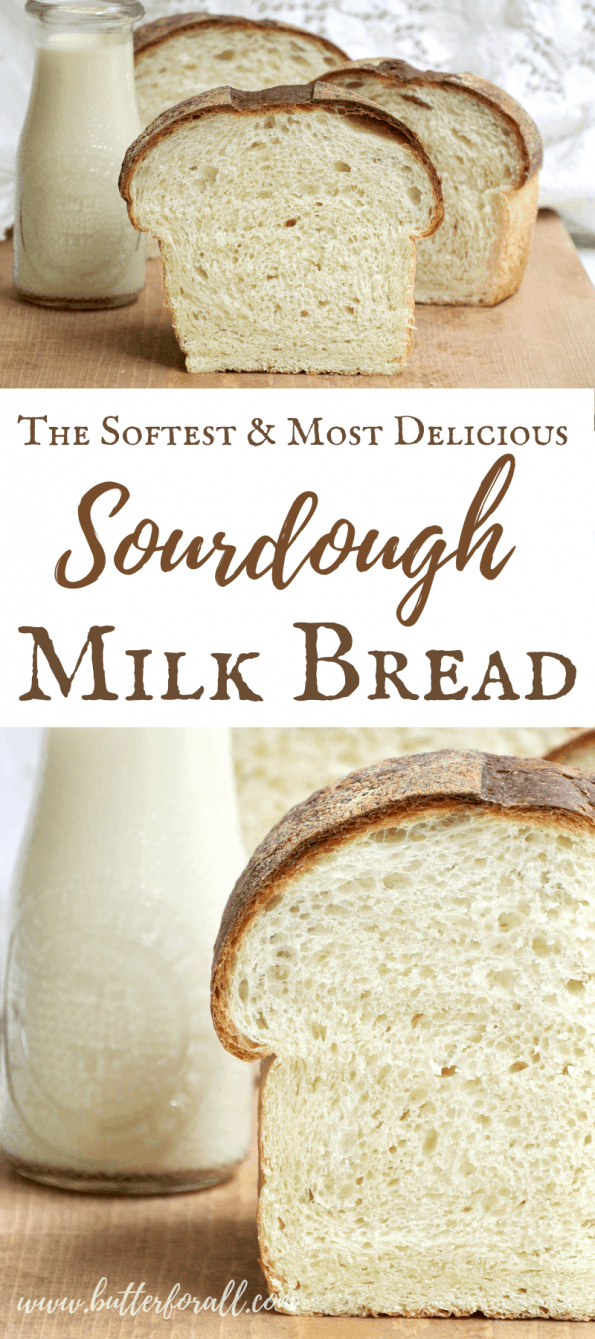
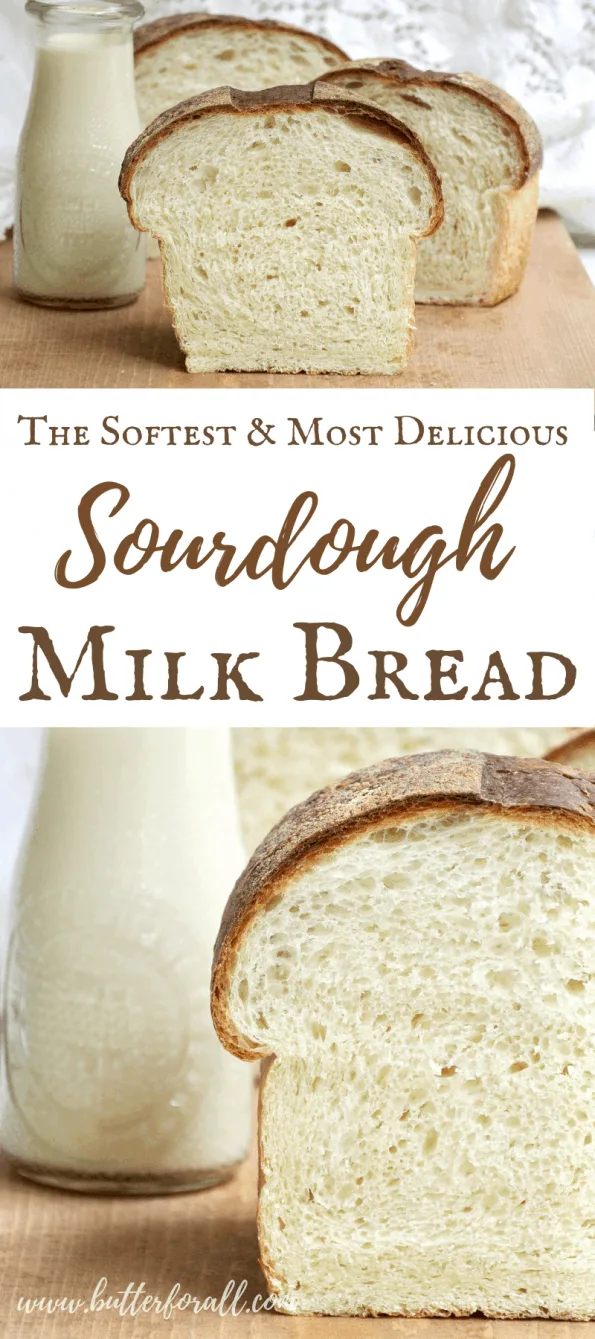
This super soft and light bread is made with fresh milk and honey for the perfect tender sweet crumb. It makes excellent sandwich bread, French toast, and croutons … if it lasts that long.
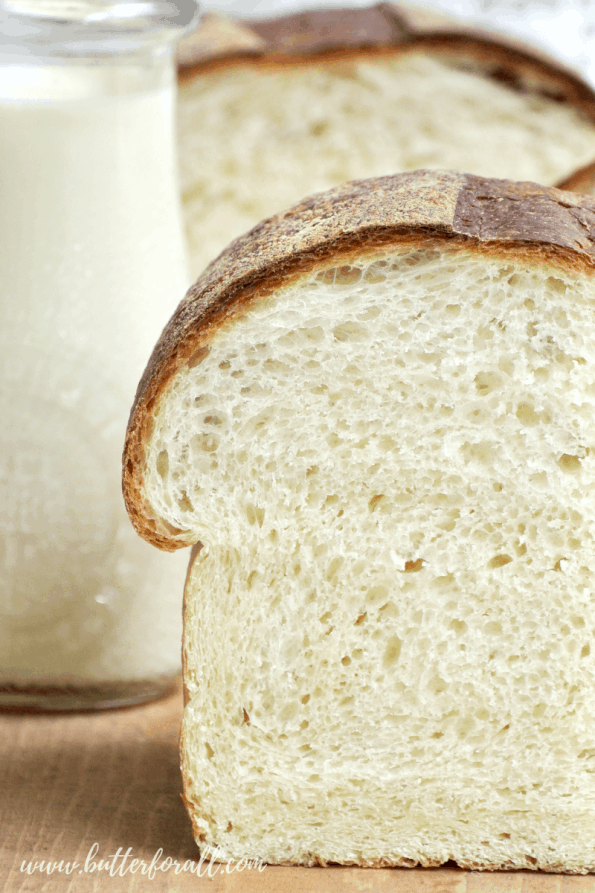
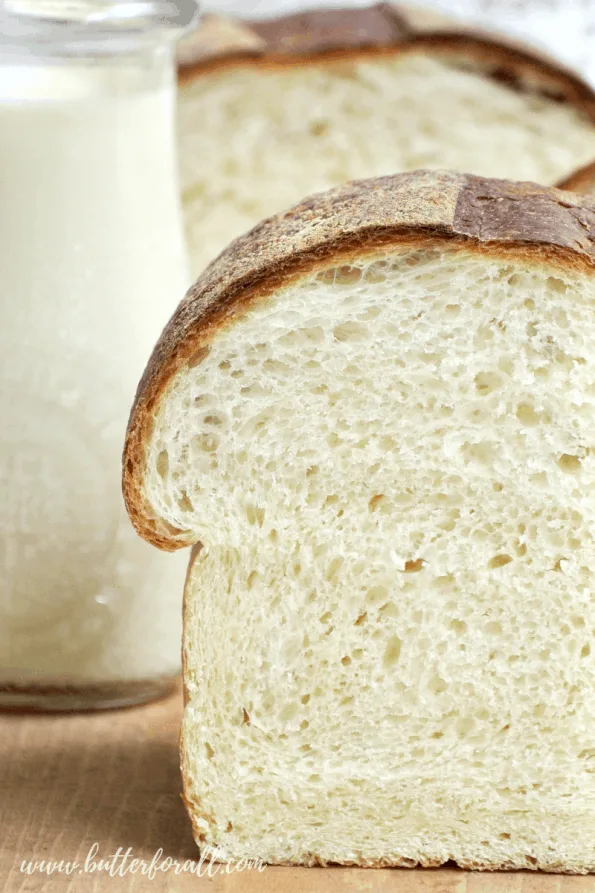
Just like all my other sourdough recipes this special sourdough milk bread goes through a long, slow fermentation that helps to break down hard to digest gluten and activate tummy-friendly enzymes. I would go so far as to say this is as close to “no guilt” white bread as you can get!
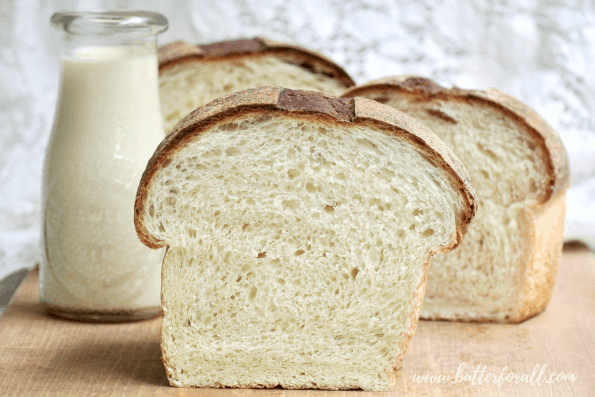
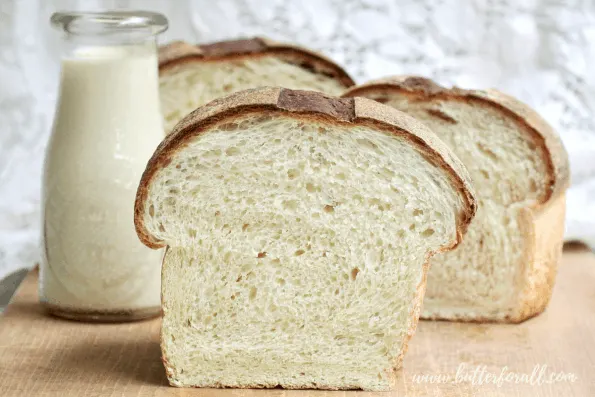
The recipe makes two sandwich-size loaves, perfect for everyday eating, gifting, or freezing for convenience.
Everybody who has tried this bread has fallen in love with its soft texture and sweet but full-bodied flavor!
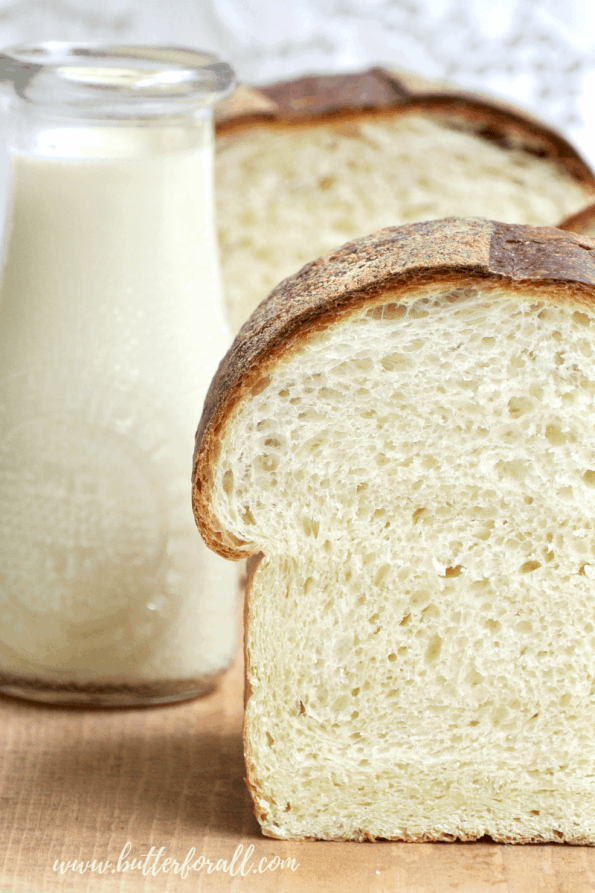
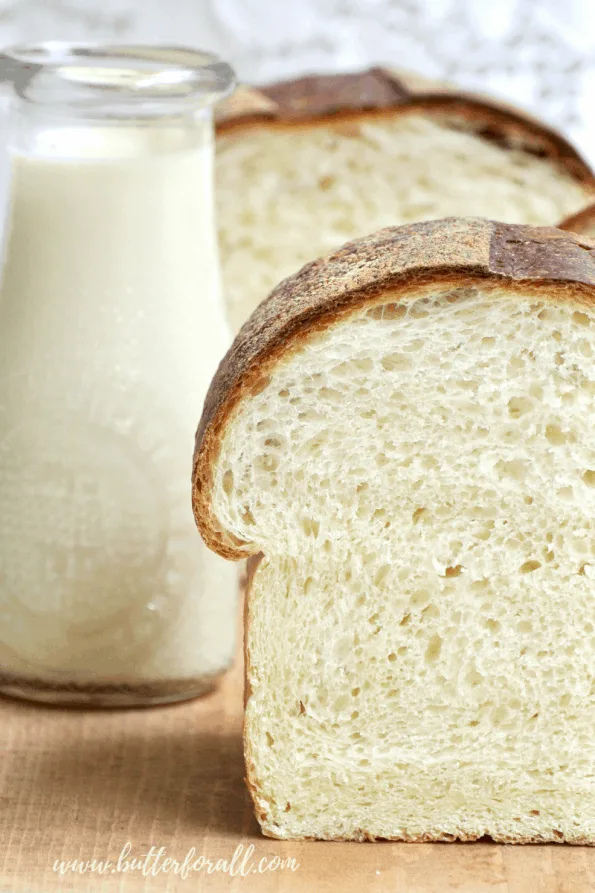
Try this bread in my favorite sandwich, the Monte Cristo! Or my second favorite, a simple grilled cheese with homemade Healthy Probiotic Mayonnaise!
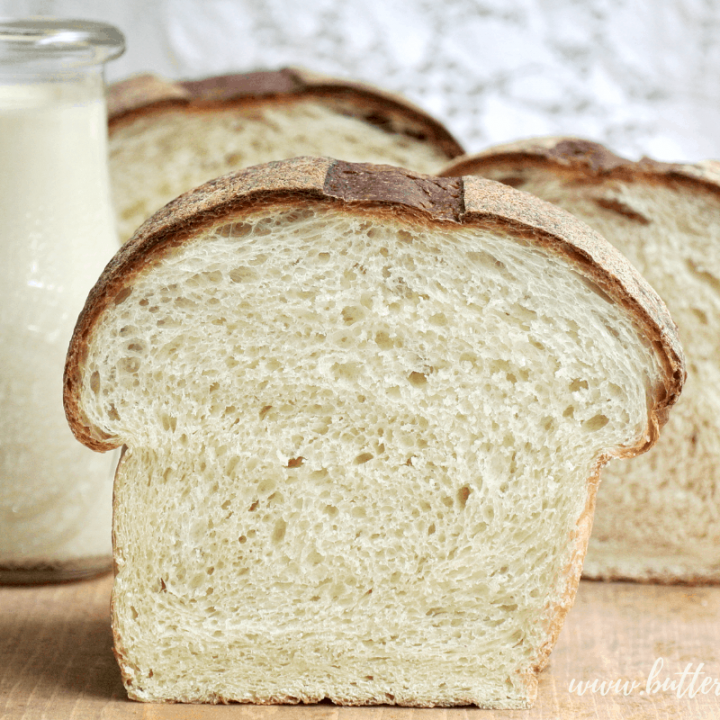
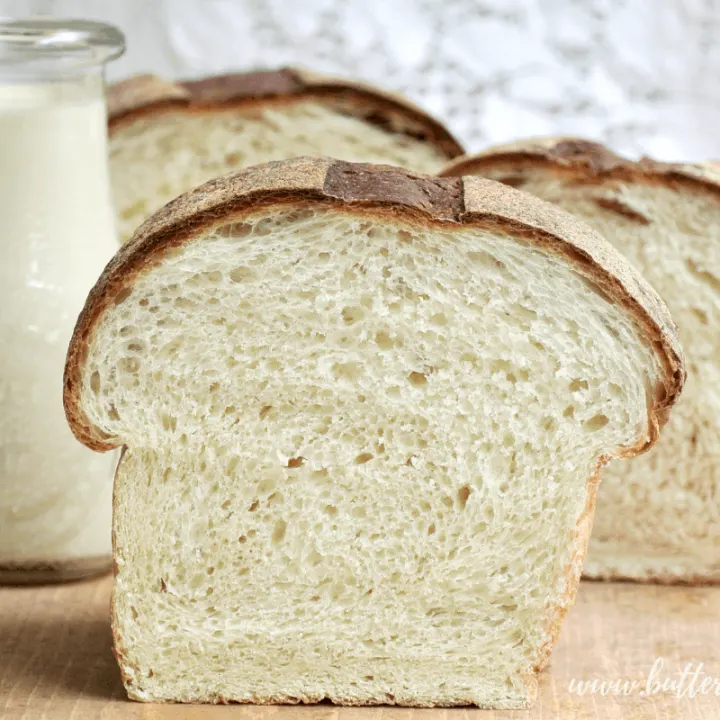
Sourdough Milk Bread
This soft sourdough milk bread is lightly sweetened with honey for the perfect balance of flavors!
Ingredients
- 250 grams (1 cup after being stirred down) active sourdough starter, 100% hydration
- 300 grams (2 1/4 cups) organic all-purpose flour
- 300 grams (2 1/4 cups) organic bread flour
- 40 grams (2 tablespoons) raw honey
- 420 grams (1 2/3 cups) milk (I use raw milk)
- 17 grams (2 1/2 teaspoons) salt
Instructions
The Night Before
- In a large bowl gently mix all ingredients, just until incorporated. Let the dough rest for 10 minutes.
- If measuring by volume, you might need a little more milk depending on how your dough feels. The dough should be tacky but not too sticky.
- Using slightly wet hands do several rounds of stretch and folds in the bowl, letting the dough rest for 5 minutes in between each round.
- Once the dough is soft and smooth with long strand gluten development, gently shape it into a ball in the bowl. Cover and proof overnight at room temp (65℉). I let mine go for 10 to 12 hours.
The Next Morning
- Do one round of stretch and fold in the bowl to deflate the dough. Let the dough rest for 10 minutes.
- Butter two loaf pans and set them aside. (I use cast-iron or glass loaf pans)
- Lightly flour your work surface and turn the dough out. Divide in half and gently shape each half into a loaf by first patting the dough into a rectangle. Next, bring the top third toward the center and the bottom third over it. Let the dough rest for a few minutes and then do the same patting out and folding over in the opposite direction. Let the dough rest seam side down for 5 minutes before transferring it into the loaf pan for the final rise.
- Let the dough rise at room temperature until doubled.
- Preheat your oven to 400℉.
- Score the loaves straight down the middle with a lame or razor blade. Spray each loaf lightly with filtered water.
- Bake both loaves side by side in the center of the oven for 30 minutes. Rotate the loaves once at the 15-minute mark.
- Remove the loaves from the oven and let them cool for 5 minutes before turning the loaves out of the pans and cooling them completely on wire racks.
Notes
What size loaf pan?
Both the 8 1/2 by 4 1/2-inch and 9 by 5-inch pans will work well for this recipe. If you use the 8 1/2-inch pans the loaves will be taller. 9-inch pans will give a wide loaf.
Flour Substitutions:
Using 100% bread flour or 100% AP flour is fine. Adjust milk if needed.
If wanting to incorporate whole wheat or ancient grain, use no more than 25% to add flavor and nutrition without affecting texture and rise.
Rolls Variation
Total Dough Weight: Approximately 1,327 grams.
To make rolls, divide the dough based on your desired size or number of servings:
- For 16 extra-large rolls: 80g each (very generous size).
- For 20 medium-large rolls: ~66g each.
- For 24 classic dinner rolls: ~55g each (standard American size).
Tip: Calculate for any recipe by adding total ingredient weights, then divide by preferred roll weight or number of servings.
Recommended Products
As an Amazon Associate and member of other affiliate programs, I earn from qualifying purchases.


Nutrition Information:
Yield: 2 Serving Size: 1 gramsAmount Per Serving: Unsaturated Fat: 0g
Want To Learn Everything About Sourdough?
Start with this free guide:
Ruth
Wednesday 19th of November 2025
I love this recipe…..I have been making it in triple (3 separate bowls) at a time = 6 loaves. It freezes beautifully. It is just the best sourdough sandwich bread. My question is about using this for dinner rolls. Any idea how many I would get per recipe?
Butter For All
Thursday 20th of November 2025
Hi Ruth!
Thank you so much for the positive feedback! I'm thrilled that you love this recipe.
As for turning it into rolls, the total dough weight is about 1,327 grams. This means you could make approximately 16 rolls at 80 grams each (that's a very generous, extra-large size).
To figure this out for any recipe, simply add up the total weight of all ingredients, then divide by your desired roll weight.
Alternatively, divide the total dough weight (1,327 grams) by the number of servings you want: - For 20 servings: 1,327 ÷ 20 ≈ 66 grams per roll (a medium-large size). - For 24 servings: 1,327 ÷ 24 ≈ 55 grams per roll (the size of a classic American dinner roll).
In summary, depending on your preferred size, you could get: - 16 extra-large rolls (80 grams each), - 20 medium-large rolls (66 grams each), or - 24 classic dinner rolls (55 grams each).
I hope this helps and Happy Baking!
Diana
Thursday 30th of October 2025
This is my new favorite sandwich bread recipe. My family loves it too! It is so fluffy inside, but has a nice textured crust. I have made this several times as written, so I was feeling adventurous this week and added in 25% fresh milled einkorn to see what would happen. It worked out perfectly. It rose faster and tastes a little more sour than usual, which makes sense, but the texture is just as fluffy!
Butter For All
Wednesday 19th of November 2025
Hi Diana! Oh, I love the idea of adding a little bit of einkorn for flavor and nutrition! Yum! Thanks so much for providing feedback for all the readers to benefit from :)
Yems
Friday 17th of October 2025
I need to make one loaf, can I just half all the ingredients
Butter For All
Wednesday 19th of November 2025
Absolutely, it'll work perfectly
Rose Prince
Friday 19th of September 2025
I have one more question. Everything went well in making the dough. By morning, it had risen nicely. But when I put the loaves in the pans for the final rise, I waited for them to double,(thinking it would only take an hour or so),but they've been rising 5 hours and still haven't doubled. So how long did it take for your loaves to rise in the pans, before baking?
Butter For All
Monday 29th of September 2025
Hi again! It can take anywhere from 1 to 8 hours depending on the temperature the starter strength, so many factors. In my personal experience it usually takes around 2 or 3 hours to double after shaping. If the dough never doubles, then there's a good chance that it over fermented during bulk fermentation. That would be it used up all of its energy during bulk and there wasn't enough left to rise a second time. I'd love to hear how it turned out!
Rose Prince
Thursday 18th of September 2025
I just finished making this recipe and I'm excited to see how it turns out when I bake it in the morning, because the dough is so soft and pliable. From all my bread making experience, this usually indicates it will be a good bread. However, I've never made a sourdough sandwich bread that calls for milk, so I was curious if it's safe to leave the dough out at room temperature that long, on the counter? Won't the milk in it go bad?
Butter For All
Monday 29th of September 2025
Hi Rose, It's totally safe to leave your bread to ferment on the counter with milk in it. The sourdough process actually acts like a preservative and inhibits any pathogen growth. In my 23 years of experience I've never had or heard of any incident. Of course, that doesn't mean that it can't happen so don't eat the dough without baking, and if you notice any really bad odors or colors then go ahead and toss it out. I hope you have a great experience with this recipe!